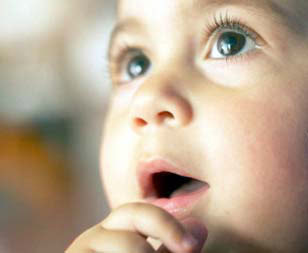
 The healing magic of wonder, awe, delight, and playfulness
There’s an old Irish joke in which someone asks an elderly man for directions. The man replies, “I wouldn’t start from here.”
If we don’t start out from the right place, then we don’t have anywhere good to go home to when the dark times come, and that is an increasing problem in our modern, secular, pseudo-religious world.
All the great mystics—whether religious or spiritual—know that we have to start with wonder, with awe, with delight, and with beauty, or we have nowhere safe to return. It’s in the teachings of Thích Nất Hạnh, Stuart Wilde, and Louise Hay just as it is in the words and art of mystics like Hildegard of Bingen and Mechthild of Magdeburg. It’s at the very start of the Bible too. The translation, “And God saw that it was very good,” is a pretty measly version of the Hebrew words me’od towb, which are much more accurately translated as “exceedingly, abundantly, richly, greatly, merrily, bountifully wonderful.”
The great mystic Rabbi Heschel wrote, “The idea with which Judaism starts is not the realness of evil or the sinfulness of man, but rather the wonder of creation.” Doesn’t that sound like a better way to live?
A COMMON START
We do all start with awe and wonder. As babies, everything is new and amazing. We don’t know or care what things are for, who made them, what they are called, or how they are categorized. More than anything, we want to touch them, play with them, or taste them—to experience them viscerally. If we don’t like them, we’ll make that quite clear, and if we do, we will fuss if this new joy is taken away from us.
We can still find awe and wonder in nature and, sometimes, even in humanity. Probably the primary reason we are no longer encouraged to prioritize finding the marvelous and mystical is that they are both unsafe. Experiencing them with all our senses takes us to the edge of reason, to a place where, albeit momentarily, we stop defining, calculating, comparing, or competing. A moment of awe has color we can taste, sound we can see, and scent we can hear, and it radiates at a cellular level.
Seeing the Mona Lisa in person with our own eyes is very different from looking at a photograph of the Mona Lisa. Swimming with dolphins is transformatively different from watching dolphins on television. No child raised mainly on the internet is going to understand the primal beauty of life. We all need the opportunity to play with lambs, inhale the farmyard scent, and get covered in straw and muck—or, at least, see (and smell) a lion in real life. Until you tell kids that poo is dirty or bad, kids just love poo.
Education, while important, makes us define things and categorize them, and sadly, it also tells us that they aren’t magical; they are just everyday-normal and mainly important for passing exams. If we see a new wildflower, we check an app to see what it is called and from then on, it’s “herb Robert” or “pink purslane.” Wasn’t it more fun when we could crouch down before the bloom and ask it, “Who are you?” When we were children, it would probably answer and tell us it was “Bert” or “Maisie,” which would make us laugh, and even if it didn’t, it would be the magical “pink fairy flower” to us from then on—and its enchantment would still be ours.
To name something is to define it. In every area of our lives, we let others define pretty much all that we experience, and as those others are frequently disillusioned or just trying to get the brand to sell, we are short-changed of mystery.
My husband and I recently watched the movie Ticket to Paradise. George Clooney’s character refers to the Balinese shaman who’s about to conduct his daughter’s wedding as “the hat guy.” I suspect some authority figures might think that disrespectful, but both my husband and I now say, “Oh, a hat guy!” anytime we see a bishop or any senior minister with a head covering. We find that simple practice completely childishly delightful—not just because it’s silly but because it makes all the hat guys shamans, and that feels really good to us. They are no longer defined by their religion but by a mutual-yet-diverse link to Spirit.
We can still find awe and wonder in nature and, sometimes, even in humanity.
FOUR PATHS TO WHOLENESS
So in times of crisis, we need that well of delight, awe, and—yes—uncertainty to return to. If we don’t have it, the campaign against will begin to pull us down into the exact same energy as the trouble. As Albert Einstein has been credited as saying, you can’t solve a problem with the energy that created it. This is why so many activists are focused on bringing down the bad without concrete plans for rebuilding the good. They see the need for justice without having experienced the origins of peace, so they can’t bring the rest of us home.
Luckily, the solution is simple. It isn’t easy because it takes huge discipline in a world that offers us 30 seconds of dopamine on the internet as a handy excuse not to do the work we need for a thorough visceral exercise routine of joy.
The mystics teach that to become whole, a human must take four paths, starting with the Via Positiva—the experience of joy—and then merging this with the Via Negativa—the understanding of letting go, of death and of suffering. The two together lead naturally to the Via Creativa, where we build the new from the roots of both our joy and our pain. Doing that takes us into the Via Transformativa, where we become advocates of blessing and justice and genuine channels of grace who can work effectively in the world to bring peace.
The easiest way to connect to all the paths is to play outside like a kid. Maybe build a sandcastle or make mud pies. There’s joy in the feel of the tiny grains or the sucking strength of the mud and the experience of returning to a simpler time. There’s engagement with the Earth herself and rediscovering the talent of human hands in being able to take basic soil and water and meld them instinctively to make something brand new. There’s the effect of grounding ourselves too.
When I had stage-four cancer, lying naked on the vegetable patch stopped the pain completely in the moment and for up to three hours afterward. I also amused the postman greatly (don’t panic, I was covered in a rug!). Gardening and walking barefoot and connecting with the earth are very important, especially in a world where we spend much of our vacations sitting on plastic lounge chairs on concrete around a pool or wearing plastic-soled shoes.
Then there’s the disappointment of our castle or mud dish falling over, of it not being “good enough,” which often spurs us on to create something unique to us rather than copying someone else’s design. The transformation aspect comes from all three other paths: The positive succors the negative and becomes creativity, which leads to realization—whether it’s the knowledge that the tide or the rain will take everything away eventually or, conversely, that there is always a chance to build anew. And we may laugh. Laughter is the culmination of all four paths and a return to the first one again. We laugh for joy, we laugh at irony and life’s pratfalls, and very often we laugh at our creative failures.
CHRISTMAS CAKE CALAMITY
Back when I was ill, I wasn’t strong enough to make my usual family-size Christmas cake. Everyone said, “Don’t bother,” but this annual ritual was such a joy to me that I couldn’t bear not to do something. So I very slowly and clumsily made and iced a much smaller cake.
Once it was made, I had the delight of achievement (Vias Positiva and Creativa). And then, as I placed it in a tin and tried to carry it across the hallway to store it, I lost my balance and fell. The tin hit the ground and the whole cake shattered. It was still in the tin, although the lid came off, so at least it wasn’t covered in carpet and dog hairs, but it was one huge mess. Our two beagles came to investigate, and I tried frantically to push them away. The cake I had tried so very hard to bake was ruined (Via Negativa).
My husband sat down beside me and held me. We both looked at the shattered cake, and he tried to comfort me while still batting at beagles. Slowly, we began to giggle. And then we began to laugh and laugh and laugh (Via Transformativa).
We ate every morsel of that cake. It was delicious, and every time we opened the tin for another spoonful, we laughed some more. The cake became the best Christmas cake ever, and I post a picture of it every Advent on my Facebook page.
So the best remedy for cruel and unusual times is to rediscover play and get ourselves back to the heart of awe, delight, and joy—even if for only five minutes a day. Then no matter how arduous the road becomes, we will always be able to return home safely.
— © Spirituality & Health, December 2025, by Maggy Whitehouse