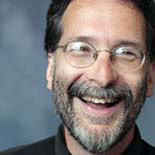
 A Tribute To Brian Doyle
You believed that everything is a form of prayer, including laughter, including tears. Yes, you were a reverential man, but you weren’t stiff or boring or preachy or dour. Your essays were both concise — often just a page in length — and lush, your sentences as intricate and twisty as plants in a terrarium. You combined prose and poem (and prayer, you said) to bear witness to the miracles around us. One of your twenty books consisted entirely of prayers in which you praise (or try to praise) admirable and not-so-admirable things: loud recycling trucks; editors; cats (alas, not your favorite creature); a girl singing at a bus stop; the doctor who saved your son’s life; little brown birds; decent shoes; firemen and firewomen; wicked hot showers. Of your twenty books at least three are explicitly organized around the theme of epiphanies, that literary term with religious roots. You were firm in your Catholic faith even as you criticized the Church’s nefarious deeds and small-minded tendencies. Your stories, like those of the “skinny Jewish guy who wandered around Judea some centuries ago,” spoke of courage and humility and grace. Yet one need only a heart — no religious beliefs at all — to be stirred by your insistence that “we are called to compassion, and not to judgment.”
You grew up in a boisterous Irish Catholic family in New York City with six brothers and one sister (now a Buddhist nun), who called you “congenitally optimistic.” Your dad was a newspaper reporter and editor; your mom, a teacher. “No man ever had a happier childhood,” you wrote, “and I was that rare guy who not only loved but liked his parents.” You fell for a woman you met at a Bruce Cockburn concert, married her, and had a daughter and twin boys. You lived for many years in Oregon, where you were the longtime editor of a magazine and a diligent writer dedicated to spreading the good news that everything is connected: family, stranger, child, enemy, animal, planet, universe. Day and night; the light and the dark.
When you talked to audiences and read your work aloud, you roamed about, using funny voices, sometimes shouting, sometimes pleading, and often weeping. You were naked up there, or at least your emotions were, cajoling the world to wake up. You persuaded one audience to sing the first verse of “Amazing Grace,” and then you asked them to sing it again but louder, and they did. You told a humorous story about arguing with the Dalai Lama about sports. You cried while reading your essay about the shame you felt after shouting at your son and making him cower. You cried when talking about the couple who held hands and jumped from the burning World Trade Center. You cried about the firefighters who raced up the stairs knowing they might never come back down. You weren’t ashamed to cry in public. You said that “tears are the salt seas of the heart.”
You strummed the English language like a guitar, plucked it like a harp, banged it like a drum. Some of your sentences go on for days. The comma is rare and elusive; the adverb is close to extinct; and the adjectives are abundant, often piled high. For example: “This sweet wild silly glorious selfish violent brave nation of ours.” For example: “Such extraordinary ordinary succinct ancient naked stunning perfect simple ferocious love.” Nine adjectives for love may seem excessive, but maybe not.
Your writing tells us that the little things are not little. That miracles surround us. That suffering is ubiquitous. Let’s laugh more; let’s laugh our brains out. We can give darkness the middle finger. We are better than we think: remember those New York City firefighters running to their death. We can reach for each other and jump into the abyss. We can take off our masks or, if we can’t do that, we can squawk through the holes in them. A squawk is better than nothing. Your voice squawks and growls and roars and sings. We ought to listen to other people’s stories; we ought to appreciate all the creatures in the seas and trees and life’s big mysteries. There is grace in the most awful circumstances. We are better than we think.
In May 2017 you died of a brain tumor. You were sixty years old. You said that your writing is not about you but about us. “Please,” you implored, “reach for each other. Drop the masks. Don’t be cool.”
— © The Sun magazine, September 2017, by Carol Ann Fitzgerald