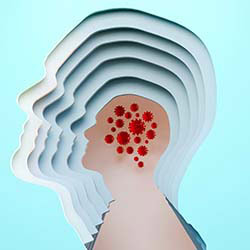
 How can we or can we ever come up with criteria that distinguish us from animals.
Probably the biggest lesson that we have learned so far from trying to build humanoid robots at MIT is that machines make lousy metaphors for human beings. To figure out who we are, we have to look elsewhere.
From evolutionary biology, we know that we share more than 98% of our genes with chimpanzees (and 50% with yeast). So, perhaps not surprisingly, the most basic biological metaphor used to split off the humanoid family is homo erectus (upright human), which sets us apart from the rest of evolution by our posture. Yet getting up on two legs does not transform a species into one that constantly asks deep and annoying questions about itself. For that we need some form of higher cognition or think-ing capability or wisdom, so scientists talk about homo sapiens (wise human) and, in our case, of homo sapiens sapiens.
But that, too, is only a start. Observations comparing human and animal behavior show that, while plenty of other animals use tools, humans seem to be unique in building tools and then using them to build more complex structures. So homo Jaber (human craftsperson) sets us apart by our ability to plan and construct over the long term. And unlike most other animals, we humans have sophisticated humor and play for joy (homo ludens). We are also a greedy bunch, driven selfishly for our own economic and commercial success, which is why theo-ries based on the metaphor of homo economicus can be applied so successfully to human markets and behavior.
Meanwhile, theologians talk about homo religiosus (religious or praying human), a metaphor that seems to fit even non-religious people if for no more profound reason than because neurologists tell us that there is a special part of our brain that is connected co religious experiences. When people
pray, this brain part is particularly active and if, in turn, the neurons in this part are artificially stimulated, the person reports a religious experience. So, perhaps, who we are and che human quest for meaning come down to our brain architecture.
What is fascinating is that all of these metaphors can be so powerfully descriptive that people often forget chat they are only metaphors. For example, seeing humans as purely egocentric, consumer-oriented homoeconomicus may accurately predict markets and make people rich. Bue caking che metaphor literally- chinking of ourselves as instruments of the marketplace – makes life pointless, empty, and ultimately baffling. By the same token, when we take our wisdom or even our religious nature too literally, the results tend to be tragic or comic or both.
So, to help keep all these other metaphors in perspective, I would like to add another to che list: Homo narrandus (storytelling human). Why? Because we humans create stories to make sense out of the chaos of our raw perceptions and experiences, to explain ideas and abstract concepts and, ultimately, to deal with the incoherence of chis world. To be a human is to constantly weave stories.
And to be in a culture means to be endlessly woven inco a tapestry of more stories. We don’t see chem as stories because we are so fully embedded in them.
Such ambiguity is extremely difficult. We wise humans want a reality that is grounded one way – our own way. What we most ardently refuse to see is that the stories that truly matter tend to reflect the nature of homo narrandus.
For example, I am committed to the Bible as God’s word, yet the stories ofJesus give no consistent body of rules, no single con-cept of the world or of God or of Christianity. Each story of Jesus is embedded in a different context, told in a different situation, re-told by different schools of thought. My Christian tradition accepts these stories as equally valid and preaches them all. They are never perceived as “wrong.” Their “richness” is often said to reflect the richness of the world in which we live, but it might also be said that the value of these stories is our commitment to them. Such is the ambiguity of faith.
Here at the Artificial Intelligence Lab, people from many different fields and cultures and faiths are combining their own stories in the effort to create a human robot that can interact with the world as we do. It is mostly a humbling process, but I do find that embodied Christian theology is enormously useful and powerful as we stumble forward in faith and doubt.
— © Spirituality & Health, Spring 2000, by Anne Foerst